London Bridge (London, England)

Picture by unknown

Niagra Falls (United States and Canada)

http://stefanobittante.blogspot.com/2007/06/niagara-falls-panorama.html

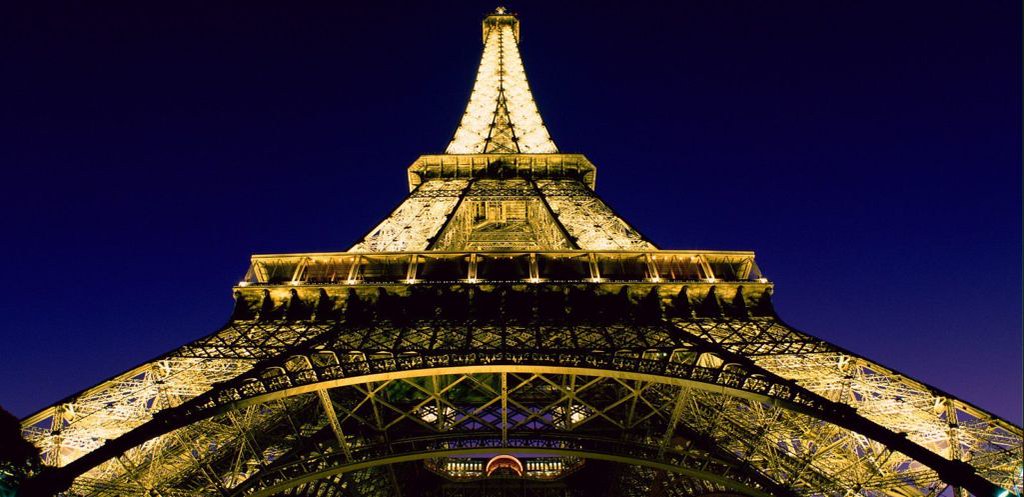
Eiffel Towel (Paris, France)

Picture by unknown

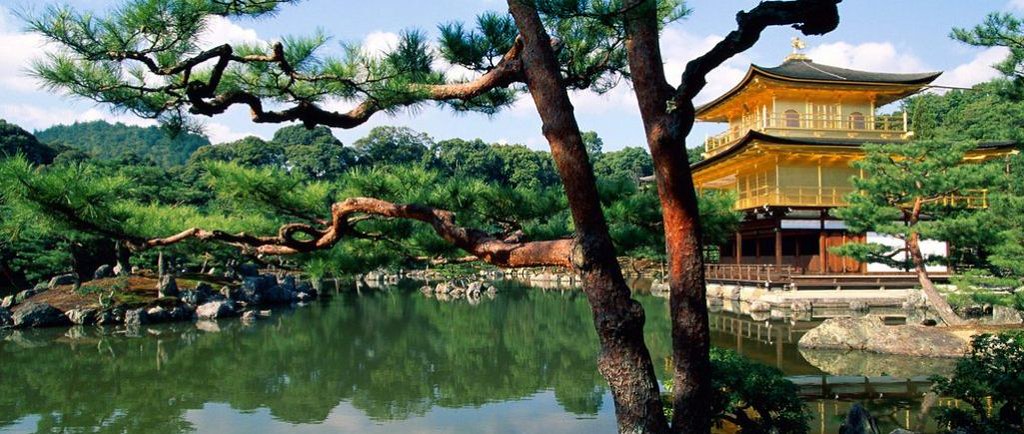
Kyoto (Japan)

Picture by unknown

Showing posts with label PILGRIMAGES. Show all posts

Thursday, November 15, 2012

Peru - Machu Picchu


PERU
Machu Picchu, also spelled Machupijchu, site of ancient Inca ruins located about 50 miles (80 km) northwest of Cuzco, Peru, in the Cordillera de Vilcabamba of the Andes Mountains. It is perched above the Urubamba River valley at an elevation of 7,710 feet (2,350 meters). Machu Picchu appears to have been a sacred, ceremonial city and astronomical observatory. This UNESCO World Heritage site is often referred to as "The Lost City of the Incas" and is one of the most familiar symbols of the Incan Empire. With its spectacular location, it’s the best-known archaeological site on the continent. The stunning Peruvian site of Machu Picchu now becomes the South America's greatest attraction, welcoming hundreds of thousands of visitors a year from across the globe. 
Machu Picchu
Historians believe Machu Picchu was built at the height of the Inca Empire, which dominated western South America in the 15th and 16th centuries. For hundreds of years, until the American archaeologist Hiram Bingham stumbled upon it in 1911, the abandoned citadel’s existence was never revealed to the conquering Spaniards and was a secret known only to peasants living in the region. The site’s finely crafted stonework, terraced fields and sophisticated irrigation system bear witness to the Inca civilization’s architectural, agricultural and engineering prowess. The 12 acres of terraces, granite houses, gardens, stairways, ceremonial temples and aqueducts sprawl along a tropical forest ridge above the Río Urubamba. Most of the roughly 150 buildings in Machu Picchu were built of granite so their ruins look like part of the mountains. Many granite blocks weigh 50 tons or more yet are so precisely sculpted and fitted together with such exactitude that the mortarless joints will not permit the insertion of even a thin knife blade. Many buildings had trapezoidal doors and thatched roofs. They used irrigation to grow corn and potatoes.
Machu Picchu terrace structure
Archaeologists have identified several distinct sectors that together comprise the city, including a farming zone, a residential neighborhood, a royal district and a sacred area. Machu Picchu’s most distinct and famous structures include the Temple of the Sun, the Room of the Three Windows, and the Intihuatana stone. These are located in what is known as the Sacred District of Machu Picchu. The Intihuatana stone's purpose is a mystery, with recent research disproving the idea that it acted as a sundial. It may have been used for astronomical observations of some form. It may also be connected with the mountains that surround Machu Picchu. Many modern-day archaeologists believe that Machu Picchu served as a royal estate or sacred religious site for Inca emperors and nobles. Machu Picchu is believed to have been a mystical place, a monument to divinity, where people can feel that they are a creation of God. The high sense of spirituality that inhabits this place seems to transport its visitors to a place where everything "in an unimaginable way" is possible. It is a place where strange forces of nature allow the individuals to reach an incomparable cosmic state, a state that can only be experimented in Machu Picchu. It is one of the most popular archaeological sites of the world, and therefore, the most visited attraction in Peru. Today, nearly one million people visit Machu Picchu every year with a limit of 2500 people daily, to see the sunset over its towering stone monuments and marvel at the mysterious splendor of one of the world's most famous manmade wonders.

The traditional and most frequent is by train from Cuzco city to the station of Machu Picchu Town (Aguas Calientes). Alternative is the Inca Trail, the trekking route. The are no roads, no cars or buses, there are no airport.

Read more Machu Picchu travel guide


Photo [1][2][3]
Text source [1][2][3]

Wednesday, November 14, 2012

Greece - Mount Athos

GREECE
Mount Athos, a World Heritage Site, is a mountain and peninsula in Macedonia, Greece containing 20 stavropegial Eastern Orthodox monasteries. Today Greeks commonly refer to Mount Athos as the "Holy Mountain". Mount Athos is the oldest surviving monastic community in the world. It dates back more than a thousand years, to Byzantine times. Although the peninsula of Mount Athos is part of Greece, it is an unique self-governed state in the Hellenic Republic. The region is governed by the “Holy community” under the ecumenical Patriarch of Constantinople. As for the religion itself, it arose after a split with the Church of Rome in 1054, largely due to questions concerning the authority of the pope. Because of its isolation, Mount Athos has remained one of the most unspoiled parts of Greece. The landscape is stunning and wild, with small green valleys and gorges, well wooded peaks interspersed with precipitous ravines and an inaccessible coastline. Small streams of crystal clear water run free under the deep shade of the chestnut trees. It is a land where myth is entwined with history, miracles mingle with reality.

According to the legend Panagia, the Virgin Mary, Mother of God, was sailing accompanied by St. John the Evangelist on her way from Joppa to Cyprus to visit Lazarus. When the ship was blown out of course to then pagan Athos it was forced to drop anchor near the port of Klement, close to the present monastery of Iviron. The Virgin walked ashore and, overwhelmed by the wonderful and wild natural beauty of the mountain she blessed it and asked her Son for it to be her garden. A voice was heard; "let this place be your inheritance and your garden, a paradise and a haven of salvation for those seeking to be saved". Since that moment the mountain was consecrated as the garden of the Mother of God and is out of bounds to any other women. The imperial document (typicon), known as the avaton, was established permitting only men to enter Mount Athos but no female may set foot on the peninsula. 

Mount Athos
To visit one of the monasteries, men must obtain permits (diamonitirion) from the Pilgrims' Bureau in advance, and crowds are limited to 100 per day. Once you have gained permission from the Pilgrims' Bureau you must contact each monastery where you plan to stay. Without their consent you will be turned away. The "general diamonitirion" usually granted to visitors allows you to stay a maximum of three days, visiting monasteries at will. The more rare "special diamonitirion" allows an unlimited stay at only one monastery. Once there, serious contemplation and meditation are encouraged; gawking tourism is not. Visitors are allowed to eat and room with the monks, as well as participate in daily work routines.

The monasteries on Mount Athos can be reached only by ferry, either from Ouranoupoli (for west coast monasteries) or from Ierissos for those on the east coast. Many visitors arrive at the port of Dafni (Daphne), from where they continue by bus to the "capital" Karyes. Smaller boats, people carriers and taxis ferry pilgrims from monastery to monastery. For boat schedules, check here.

It is possible to walk from monastery to monastery. The longest walk is from Agia Anna to Great Lavra (six to seven hours). Many of the ancient footpaths are still clear but from time to time it will be necessary to walk on the roads.

There are also sightseeing boats that do tours around the peninsula without landing; these require no permits, and are the only option for women who want to get a glimpse of Mount Athos.


Text source [1][2][3]

Monday, November 12, 2012

Colombia - Las Lajas Cathedral Sanctuary


COLOMBIA
On the borders between Colombia and Ecuador in a teeming jungle canyon is a beautiful sanctuary, Las Lajas Cathedral, a wonder to its visitors. Las Lajas Cathedral is situated among the remote mountains of southwestern Colombia, municipality of Ipiales and is considered one of the most brilliant pilgrimage shrines in the world. The church stands on stone stilts spanning a raging river and the view includes dense forest and a towering waterfall. 

The inspiration for the church's creation was a result of a miraculous event in 1754 when an Amerindiannamed Maria Mueses de Quinones and her deaf-mute daughter Rosa were caught in a very strong storm near Las Lajas ("The Rocks"). Weary of the climb, Maria Mueses de Quinones sat down on a rock when Rosa spoke for the first time about an apparition in a cave.

Later on, a mysterious painting of the Virgin Mary carrying a baby was discovered on the wall of the cave. Supposedly, studies of the painting showed no proof of paint, dye or any other pigments on the rock. Instead, when core samples from several spots in the image were taken, they were found that the colors were perfectly impregnated in the rock itself to a depth of several feet. This apparition of the Virgin Mary caused pilgrimages to this location, with occasional miraculous cases of healing reported. It is now known as the Virgin of Santisima. The miraculous image on the stone is still visible today. Today, this image of the Virgin Mary is located on a 45 m high rock, which can be seen on the back of the Las Lajas Cathedral. 

Our Lady of Las Lajas
The construction of the fabulous Las Lajas started at the beginning of last century. The church is of Gothic revival architecture. The foundations of the church were laid in 1916 and finally Las Lajas was completed in 1944. The official dedication of the church was on August 20, 1949. Las Lajas Cathedral is designed so that the image of the Virgin Mary is visible form its highest altar. The church was built entirely with donations from local people, replacing an old nineteenth-century small wooden chapel.

In 1951 the Roman Catholic Church authorized the Nuestra Señora de Las Lajas virgin, and it declared the sanctuary a minor basilica in 1954.

Today the Las Lajas Cathedral is a place for pilgrimages by many thousands of pilgrims from both Colombia and Ecuador. The easiest way to the fabulously beautiful church is by taxi from the station into the near by city of Ipiales. Do not miss the opportunity to stop on the high cliff and look at Las Lajas, which stands magnetically down the canyon of the river.

Border Crossing [1]

From Ipiales the bus drops you off outside the Colombian migration office where you get your exit stamp. From here walk down the stairs across the car park to the building in front of you just up the slight hill, you need to go around to the other side of the building to join the line of people waiting for their entry stamp for Ecuador (this may take a while). When getting issued your stamp ask if you can have the tourist card (T-3) stapled into your passport or your may end up begging not to have to pay the USD$200 for a new one if you lose it.

After receiving your stamp, get a mini-bus outside. This will drop you off at the bus station in Tulcun. Here you can expect to be rushed by men trying to get you on their bus bound for Quito or whereever else you maybe going. They are harmless just watch your stuff and do not let them push or drag you around.


Monday, November 5, 2012

Portugal - The Cova da Iria, Fátima


PORTUGAL
The Cova da Iria was land belonging to Lucy dos Santos' family where the three children frequently pastured their sheep. It was here that Our Lady appeared to the three seers six times and gave Her Message to the world.

Esplanade

A really big square 540 m x 160 m which can receive up to 300 000 pilgrims. The Esplanade, with its monumental flights of steps and colonnades, and Stations of the Cross in polychrome ceramic designs, has a statue of the Sacred Heart of Jesus in the middle and on the North side, there is the direction management office where you can inquire about all the things there are to see at the Sanctuary: pilgrimages, schedules of masses and general information. 

Chapel of Apparitions (1)

The very heart of the sanctuary is a small, simple chapel known as the "Little Chapel of the Apparitions". It was the first edifice constructed in the Cova da Iria, at the place of Our Lady's Apparitions. The holly oak above which Mary appeared has long since been destroyed by relic seekers, but a column with a statue of  Our Lady stands in its place. The holly oak which grows close by is said to be where the children awaited the apparitions.

The Recint (2)
 
On the colonnade in front of the Basilica, statues of four Portuguese Saints can be seen: St John of God, St. John of Brito, St. Anthony and Bl. Nuno of Santa Maria.

From one side to the other, from left to right, are the following saints: St. Teresa of Avila, St. Francis de Sales, Bl. Marcelino de Champagnat, St. John Baptist de la Salle, St. Alphonsus Maria de Ligouri, St. John Bosco with St. Dominic Savio, St. Louis Marie Grignon de Montfort, St. Vincent de Paul, St. Simon Stock, St. Ignatius of Loyola, St. Paul of the Cross and St. Beatrice da Silva.

The white marble statue in the niche above the entrance to the Basilica shows Our Lady in one of her apparitions when she urged devotion to her Immaculate Heart.

Basilica (3)

The Basilica of Our Lady of Fátima crowns the sanctuary. Built between 1928 and 1953 it contains, in addition to the spectacular altars, paintings, statues and stained glass, the tombs of the shepherds. Suitable clothing is required to enter. It stands at one end of the huge square, twice as large as St. Peter’s in Rome, and is filled with pilgrims on the important celebration days. The centre of the square contains the Monument to the Sacred Heart of Jesus, built over a spring that has been "the instrument of many graces."

Church of the Most Holy Trinity

On the opposite side of the square is the new Church of the Most Holy Trinity, the fourth largest Christian church in the world, capable of accommodating 8,500 people. It’s modern architecture is not immediately to everyone’s taste, but it is certainly magnificent.

Perpetual Adoration Chapel (4)

Situated at the end of the colonnade, on the eastern side, this chapel for perpetual adoration of the Blessed Sacrament exposed, is a place of silent prayer and adoration.

The Big Holmoak (5)

Under which the little shepherds and the early pilgrims awaited Our Lady's coming, and prayed the Rosary.

Monument to the Sacred Heart of Jesus (6)

Which stands in the center of the square, over a spring found there, its waters being the instrument of many graces. 

House of Our Lady Dolours (7)
 
Situated behind the Chapel of Apparitions, it is destined to receive the Sick during the great pilgrimages, and also for retreats and accommodation for pilgrims in general.

Rectory (8)
 
A building on the right side of the esplanade, in the House of Our Lady of Carmel.

House of Our Lady of Carmel (9)
 
Which is above and behind the Rectory, with accommodation for 250.

Berlin Wall (10)
 
At the entrance of the Sanctuary, on the south side of the Rectory, one may visit a monument of the Berlin Wall's, consisting of a concrete segment that was part of it. It was created as a grateful memorial of God's intervention for the fall of Communism as promised at Fatima.

High Cross (12)
 
At the extreme south of the esplanade, it commemorates the closing of the Holy Year in 1951.

Monument to Pope Paul VI (13): marking his pilgrimage to Fatima, on 13 May 1967.

Monument to Pope Pius XII (14): erected as gift from German Catholics (1961).

Paul VI pastoral centre (15)

(Access beneath the esplanade) inaugurated on 13 May 1982, by Pope John Paul II, as a centre for study and reflection on the Message of Fatima, and of the problems of the modern world, in the light of the Gospel. Visiting is possible when there are no activities

Monument to D. José Alves Correia da Silva: first Bishop of the restored diocese of Leiria (1920-1957), who declared the Apparitions of Our Lady at Fatima worthy of belief, and authorized the respective religious cultus (13 October 1930).


Text source [1]


Friday, November 2, 2012

Portugal - What the pilgrims should see in Fátima

PORTUGAL
Fatima is a town located 142 km (88 miles) North of Lisbon. Fatima is one of the most important catholic shrines in the world dedicated to the Virgin Mary. The visit you are going to make will bring you into the atmosphere in which the little Shepherds lived. Try to feel the peace of these places and to live in such a way as to remember the message of the Mother of God.

Aljustrel and homes of the little Shepherds

Francisco e Jacinta Marto
Aljustrel is one of the places which make up the Parish of Fátima, and where the three Little Shepherds were born. The village lived its peaceful life which was marked by the seasons of the year and by the work in the fields, tending the livestock and the crops, as well as weaving. These activities were its chief means of subsistence. There lived here, among others, two related families: the Santos' and the Marto's. Of the few houses of the era which still stand, even though restored, there are two which now belong to the Sanctuary and where the little Shepherds were born and raised. These house deserve a visit because they are a part of the history of Fátima.

Poço do Arneiro 
Poço do Arneiro
At the bottom of the garden of Lucia's home is the WELL, where the Angel 2nd apparition took place in the summer of 1916. The Angel told them, "I am the Guardian Angel of Portugal. Offer all that you do, to the Most High, as prayers and sacrifices."

Sitting on the edge of the well, Jacinta had a vision of the Holy Father in a very large house, on his knees, in front of a table, with his face in his hands, crying. Outside the house were many people; some threw stones at him while others shouted ugly words. "Poor Holy Father! We have to pray much for him."

Valinhos
Valinhos, Fátima
On August 13, 1917 there was no apparition of Our Lady, because the Administrator of Vila Nova de Ourém took the three children to the prison where they were kept for three days and had thus not been at Cova da Iria as Our Lady had instructed.

On the following Sunday, August 19, 1917, Our Lady appeared, the fourth apparition, in Valihos at 4:00pm. The apparition site is marked with a monument of Our Lady. She said, "Pray! Pray much and make sacrifices for sinners, for many souls are going to hell because they have nobody who prays and makes sacrifies for them." Here she told them to continue visiting the site the two following months.

Loca do Cabeço
Loca do Cabeço, Fátima [Photo]
Close to here, on a little hill called the “Place of the Angel”, is where the angel appeared to the children the first and the third time. 

In the spring and autumn of 1916, the 'Angel of Peace' appeared to the three little Shepherds. In the first apparition he taught them the prayer, "My God, I believe, I adore, I hope and I love You. I ask pardon for those who do not believe, do not adore, do not hope and do not love you." On the third apparition, the Angel held up a chalice and a host, and prayed with the three little Shepherds. After that, He gave them communion saying, "Take and drink the body and blood of Jesus Christ, horribly outraged by ungrateful men. Make reparation for these crimes and console your God." Here the Holy Way, which ends at the sanctuary itself, starts. 

Stations (Way) of the Cross and Calvary

Calvary & Chapel of St. Stephen [Photo by bbarna]
This has 14 little chapels in memory of the Passion of Jesus and a 15th in memory of the Resurrection. These stations begin at the South Rotunda of Saint Teresa, follows the path which the little Shepherds took when going from Aljustrel to the Cova da Iria, and finish by the Chapel of St. Stephen. The stations and the Chapel complex are called the Hungarian Calvary because they were a gift from Hungarians in exile throughout the world.

Cova da Iria
"Little Chapel of the Apparitions" [Photo]
The sanctuary itself is built on a site called the Cova da Iria, which was where the shepherds pastured their sheep and where they were visited five times by Mary. The heart of the sanctuary is a small, simple chapel known as the "Little Chapel of the Apparitions". This was the first building to be erected here and marks the exact spot of the apparitions. The holly oak above which Mary appeared has long since been destroyed by relic seekers, but a column with a statue of Mary stands in its place. The holly oak which grows close by is said to be where the children awaited the apparitions.

Parish Church
Parish Church, Fátima [Photo by roman-man]
Francisco spent long hours praying in this church, "consoling Our Lord". The children were baptized here. It was also here that Lúcia made first confession and had her first communion at six years of age.

Cemetery of Fátima

Just across from the Parish Church, two of the children, Francisco and Jacinta Martos, were buried here before being transferred to the sanctuary.

TIPS: If you rather have some spiritual peace time while visiting Fátima, you should avoid high seasons for pilgrimages in May and October as well as the 12th and 13th of each month.
Google Fátima Map

Tuesday, October 30, 2012

Rome - Catacombs of St. Callixtus

St. Cecilia tomb (Photo)
ROME
The catacombs are the ancient underground cemeteries, used by the Christian and the Jewish communities, above all at Rome. In the beginning they were only burial places. Here the Christians gathered to celebrate their funeral rites, the anniversaries of the martyrs and of the dead.  During the persecutions, in exceptional cases, the catacombs were used as places of momentary refuge for the celebration of the Eucharist. They were not used as secret hiding places of the early Christians.

The Catacombs of St. Callixtus (Catacombe di San Callisto) are among the greatest and most important of Rome located on Appian Way, after the church of "Quo Vadis?". They are the first cemetary of Rome's Christian community, and in it were buried tens of martyrs, 16 popes, and very many Christians.

The Catacombs of St. Callixtus are named after the decon Callixtus who, at the beginning of the 3rd century, was appointed by pope Zephyrinus as the administrator of the cemetery.

In the open area are two small basilicas with three apses, known as the "Trichorae". In the Easter one were perhaps laid to rest pope Zephyrinus and the young martyr of the Eucharist, St. Tarcisius. 

Entering the catacombs, you see at once the most important crypt, called "the little vaticans", as it was the official burial place of nine popes and, probably, of eight dignitaries of Rome's 3rd century Church. Some of the original marble tablets of their tombs are still preserved. The next crypt is that of St. Cecilia, the patron of sacred music. This early Christian martyr received three ax strokes on her neck, the maximum allowed by Roman law, which failed to kill her outright. Farther on, you'll find the famous Cubicula of the Sacraments with its 3rd-century frescoes.

Catacombe di San Callisto/Catacombs of St. Callixtus

Via Appia Antica, 126
00179 Rome, Italy
tel. +39/06/51301580
fax +39/06/51301567
Website: www.catacombe.roma.it

Closed on WednesdaysHours: 9.00 – 12.00 and 14.00 – 17.00
8 € full price; 5 € reduced fee (effective 01/01/2010)

Public transportation tips:

- From Roma Termini Station, take bus 714 to Piazza di S. Giovanni in Laterano (St. John Lateran Square). Then take bus 218 and get off at stop Fosse Ardeatine. The entrance to the catacombs is just opposite the bus stop.

- Bus 118 also heads here from outside the Piramide stop of Metro line B. Or you can take Bus 218 from the San Giovanni Metro stop.  

- If you're not near to Roma Termini Station, then take any train(s) to metro station San Giovanni on Metro Line A. Walk north, through the Aurelian Walls, straight up the street until you see the bus stop. Get on bus 218 and get off at Fosse Ardeatine.

-  If you are on the Metro B line or close to Piramide Metro Station, then go to the Piramide Metro station and take the bus 118. Get off at the stop Catacombe S.Callisto (about 14 stops).