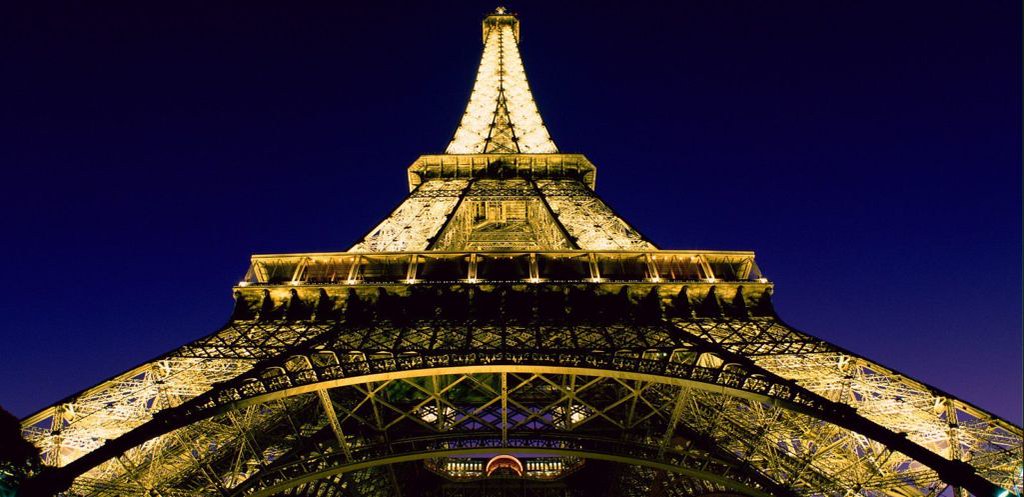
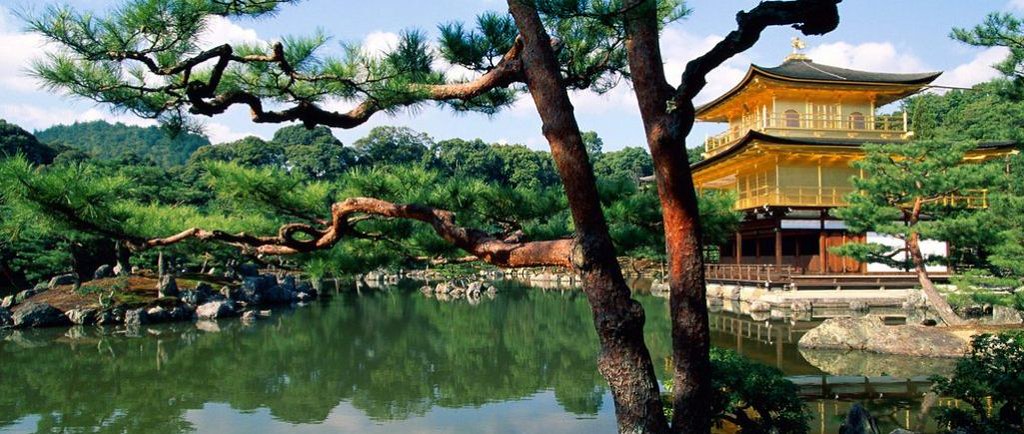
London Bridge (London, England)

Picture by unknown

Niagra Falls (United States and Canada)

http://stefanobittante.blogspot.com/2007/06/niagara-falls-panorama.html

Eiffel Towel (Paris, France)

Picture by unknown

Kyoto (Japan)

Picture by unknown

Showing posts with label UNESCO. Show all posts

Tuesday, November 27, 2012

Portugal - Batalha Monastery


PORTUGAL
Mosteiro Santa Maria da Vitória (St. Mary of the Victory), more commonly known as the Batalha Monastery, is a Dominican convent in Batalha, in the District of Leiria, Portugal. The monastery to be built by King João I in gratitude to the Virgin Mary for the Portuguese victory at the battle of Aljubarrota in 1385, and would serve as the burial church of the 15th-Century Aviz dynasty of Portuguese royals. The monastery illustrates the history of Portugal and its rich artistic heritage. It is one of the best and original examples of Late Gothic architecture in Portugal, intermingled with the Manueline style, and is protected as a World Heritage monument.

Construction of the monastery took over a century to build. It began in 1386 and continued into the 16th century, spanning the reign of seven kings. The monastery was never actually finished, and one of the most famous parts is the unfinished chapels, commissioned by King Duarte I in 1437. For a building constructed over such a long period of time, it has an amazing unity of vision. The exterior possesses innumerable pinnacles, buttresses and openwork balustrades above Gothic and Flamboyant windows, while the front portal is decorated with statues of the apostles in intricate Gothic style.

Manueline Porch
The main entrance of the Church is the magnificent portal at the West side, with numerous elaborate sculptures. On either side of this portal entrance are sculptures of the twelve apostles standing on consoles. In the center is a tall statue of Christ in Majesty surrounded by Evangelists, frames by six covings and decorated with sculptures of biblical kings and queens, prophets and angels. This set of sculptures is made complete by the crowning of the Virgin Mary.

Backing onto the right hand side of the main doorway is the Founder’s Chapel where King João is buried with his wife, Queen Philippa of Lancaster. Their son Prince Henry the Navigator is also buried here in the family tomb. The majestic interior of the church is of great grandeur and beauty, reminding a cathedral.

King John I Cloisters of Batalha Monastery
Behind the transept at the back of the Church, one reaches the Royal Cloisters, built in the reign of John I. In the Royal Cloisters, you’ll see arches, which were built later, overlooking the garden carved with leaves, flowers, fruit and many symbols used by King Manuel I, including the cross of Christ and the armillary spheres in the typical Manueline style.

Chapter's House: star-vaulted ceiling
A marvellous example of Gothic architecture is the Chapter's House. The Chapter House is famous for its amazing star-vaulted ceiling of eight points with no central support. It’s one of the most daring examples in European Gothic architecture.

Unfinished Chapels (Capelas Imperfeitas)
Behind apse of the Church, you’ll see the Pantheon of King Duarte, more usually known as the Unfinished Chapels extending high above you. Here, there is another example of the Manueline style; a doorway built in a succession of arches and slender columns that are meticulously decorated.

Address:

Largo Infante D. Henrique
2440-109 Batalha, Portugal
Tel: 244 765 497

Directions and getting there:

Flight:

Lisbon International Airport (LIS).

Road:

IC2 Lisbon/Porto (Supplementary Itinerary - Old National Road 1) - exit Batalha
A8 (motorway Lisbon) - Output in Leiria
A1 (motorway Lisbon) - Porto - Exit Fatima/Batalha
EN 356 - connecting the cities of Batalha and Fatima
Former EN 362 - linking the towns of Batalha and Porto de Mos.
Bus Station (interurban bus services) - Largo 14 de Agosto, next to the Parish Church

Opening Hours:

October - March
From 09.00 a.m. to 5.30 p.m. (last admission at 5.00 p.m.)

April - September
From 09.00 a.m. to 6.30 p.m. (last admission 6.00 p.m.)
The Monastery’s opening hours may be extended by means of advanced booking, subject to conditions.

Closed: 1 January, Easter Sunday, 1 May and 25 December

Tickets:

Individual ticket: €6

Combined ticket/the Heritage Route (Alcobaça, Batalha, Convent of Christ): €15

Special discounts:

- Visitors aged 65 and older (proof of age must be shown) and people with disabilities: 50%
- Family ticket: 50% discount for minors (aged 15 – 18) in the company of one of their parents.
- “Cartão Jovem”: 60%

Group ticket (can be purchased on site, at least 24 hours in advance, valid for one year; no refunds/return of tickets):

- 100 to 200 tickets: 5% discount
- 201 to 500 tickets: 10% discount
- > 501 tickets: 20% discount

Pre-paid ticket: (can be purchased at e-mail address bilhetesgrupo@igespar.pt at least 24 hours in advance, valid for one year; no refunds/return of tickets):

- 100 to 200 tickets: 5% discount
- 201 to 500 tickets: 10% discount
- More than 501 tickets: 20% discount

Ticket sales: on site
Forms of payment: cash, credit card, ATM and cheque

Free admission:

- Sundays and holidays until 2.00 p.m.
- Members of APOM/ICOM and ICOMOS, ANBA, APH, AICP; researchers and other professionals (art critics, journalists, tour guides and other tourist information professionals) when visiting for Professional reasons and duly identified
- Teachers and students of any education level in the context of study visits, provided they present documental proof of their status
- Sponsors
- Ministry of Culture employees Members of the “Friends of the Monuments” and “Friends of the Castles” associations, duly identified


Photo [1]

Thursday, November 15, 2012

Peru - Machu Picchu


PERU
Machu Picchu, also spelled Machupijchu, site of ancient Inca ruins located about 50 miles (80 km) northwest of Cuzco, Peru, in the Cordillera de Vilcabamba of the Andes Mountains. It is perched above the Urubamba River valley at an elevation of 7,710 feet (2,350 meters). Machu Picchu appears to have been a sacred, ceremonial city and astronomical observatory. This UNESCO World Heritage site is often referred to as "The Lost City of the Incas" and is one of the most familiar symbols of the Incan Empire. With its spectacular location, it’s the best-known archaeological site on the continent. The stunning Peruvian site of Machu Picchu now becomes the South America's greatest attraction, welcoming hundreds of thousands of visitors a year from across the globe. 
Machu Picchu
Historians believe Machu Picchu was built at the height of the Inca Empire, which dominated western South America in the 15th and 16th centuries. For hundreds of years, until the American archaeologist Hiram Bingham stumbled upon it in 1911, the abandoned citadel’s existence was never revealed to the conquering Spaniards and was a secret known only to peasants living in the region. The site’s finely crafted stonework, terraced fields and sophisticated irrigation system bear witness to the Inca civilization’s architectural, agricultural and engineering prowess. The 12 acres of terraces, granite houses, gardens, stairways, ceremonial temples and aqueducts sprawl along a tropical forest ridge above the Río Urubamba. Most of the roughly 150 buildings in Machu Picchu were built of granite so their ruins look like part of the mountains. Many granite blocks weigh 50 tons or more yet are so precisely sculpted and fitted together with such exactitude that the mortarless joints will not permit the insertion of even a thin knife blade. Many buildings had trapezoidal doors and thatched roofs. They used irrigation to grow corn and potatoes.
Machu Picchu terrace structure
Archaeologists have identified several distinct sectors that together comprise the city, including a farming zone, a residential neighborhood, a royal district and a sacred area. Machu Picchu’s most distinct and famous structures include the Temple of the Sun, the Room of the Three Windows, and the Intihuatana stone. These are located in what is known as the Sacred District of Machu Picchu. The Intihuatana stone's purpose is a mystery, with recent research disproving the idea that it acted as a sundial. It may have been used for astronomical observations of some form. It may also be connected with the mountains that surround Machu Picchu. Many modern-day archaeologists believe that Machu Picchu served as a royal estate or sacred religious site for Inca emperors and nobles. Machu Picchu is believed to have been a mystical place, a monument to divinity, where people can feel that they are a creation of God. The high sense of spirituality that inhabits this place seems to transport its visitors to a place where everything "in an unimaginable way" is possible. It is a place where strange forces of nature allow the individuals to reach an incomparable cosmic state, a state that can only be experimented in Machu Picchu. It is one of the most popular archaeological sites of the world, and therefore, the most visited attraction in Peru. Today, nearly one million people visit Machu Picchu every year with a limit of 2500 people daily, to see the sunset over its towering stone monuments and marvel at the mysterious splendor of one of the world's most famous manmade wonders.

The traditional and most frequent is by train from Cuzco city to the station of Machu Picchu Town (Aguas Calientes). Alternative is the Inca Trail, the trekking route. The are no roads, no cars or buses, there are no airport.

Read more Machu Picchu travel guide


Photo [1][2][3]
Text source [1][2][3]

Wednesday, November 14, 2012

Greece - Mount Athos

GREECE
Mount Athos, a World Heritage Site, is a mountain and peninsula in Macedonia, Greece containing 20 stavropegial Eastern Orthodox monasteries. Today Greeks commonly refer to Mount Athos as the "Holy Mountain". Mount Athos is the oldest surviving monastic community in the world. It dates back more than a thousand years, to Byzantine times. Although the peninsula of Mount Athos is part of Greece, it is an unique self-governed state in the Hellenic Republic. The region is governed by the “Holy community” under the ecumenical Patriarch of Constantinople. As for the religion itself, it arose after a split with the Church of Rome in 1054, largely due to questions concerning the authority of the pope. Because of its isolation, Mount Athos has remained one of the most unspoiled parts of Greece. The landscape is stunning and wild, with small green valleys and gorges, well wooded peaks interspersed with precipitous ravines and an inaccessible coastline. Small streams of crystal clear water run free under the deep shade of the chestnut trees. It is a land where myth is entwined with history, miracles mingle with reality.

According to the legend Panagia, the Virgin Mary, Mother of God, was sailing accompanied by St. John the Evangelist on her way from Joppa to Cyprus to visit Lazarus. When the ship was blown out of course to then pagan Athos it was forced to drop anchor near the port of Klement, close to the present monastery of Iviron. The Virgin walked ashore and, overwhelmed by the wonderful and wild natural beauty of the mountain she blessed it and asked her Son for it to be her garden. A voice was heard; "let this place be your inheritance and your garden, a paradise and a haven of salvation for those seeking to be saved". Since that moment the mountain was consecrated as the garden of the Mother of God and is out of bounds to any other women. The imperial document (typicon), known as the avaton, was established permitting only men to enter Mount Athos but no female may set foot on the peninsula. 

Mount Athos
To visit one of the monasteries, men must obtain permits (diamonitirion) from the Pilgrims' Bureau in advance, and crowds are limited to 100 per day. Once you have gained permission from the Pilgrims' Bureau you must contact each monastery where you plan to stay. Without their consent you will be turned away. The "general diamonitirion" usually granted to visitors allows you to stay a maximum of three days, visiting monasteries at will. The more rare "special diamonitirion" allows an unlimited stay at only one monastery. Once there, serious contemplation and meditation are encouraged; gawking tourism is not. Visitors are allowed to eat and room with the monks, as well as participate in daily work routines.

The monasteries on Mount Athos can be reached only by ferry, either from Ouranoupoli (for west coast monasteries) or from Ierissos for those on the east coast. Many visitors arrive at the port of Dafni (Daphne), from where they continue by bus to the "capital" Karyes. Smaller boats, people carriers and taxis ferry pilgrims from monastery to monastery. For boat schedules, check here.

It is possible to walk from monastery to monastery. The longest walk is from Agia Anna to Great Lavra (six to seven hours). Many of the ancient footpaths are still clear but from time to time it will be necessary to walk on the roads.

There are also sightseeing boats that do tours around the peninsula without landing; these require no permits, and are the only option for women who want to get a glimpse of Mount Athos.


Text source [1][2][3]